The 1980s AI Photo Trend: Evolution, Visual Mechanics, and Prompt Engineering
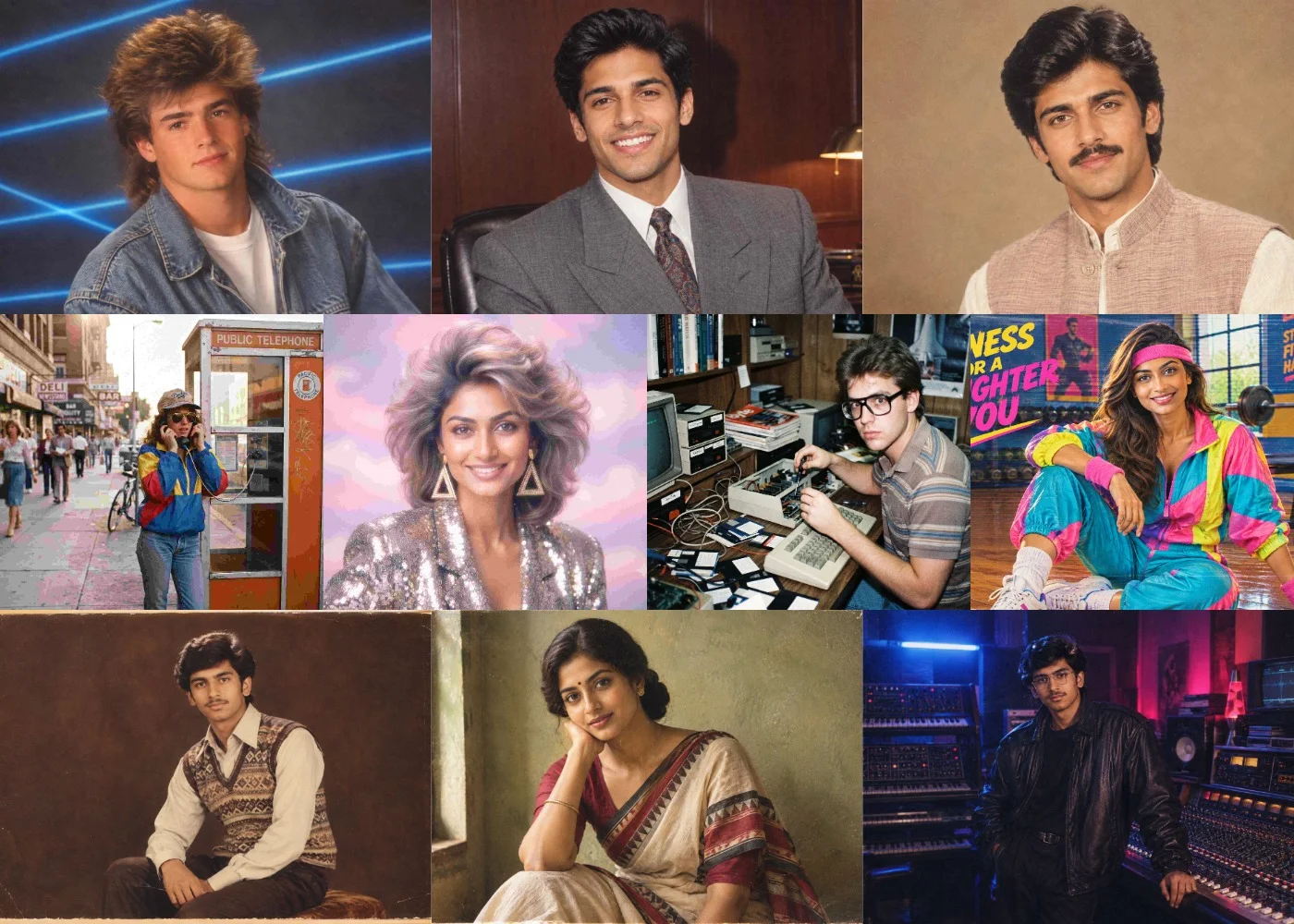
The digital landscape is witnessing a massive nostalgic resurgence known as the 1980s AI photo trend. Spurring millions of interactions across Instagram, X (formerly Twitter), and TikTok, this cultural phenomenon blends generative artificial intelligence with the distinct analog aesthetic of the late twentieth century. Unlike standard vintage filters of the past, this movement leverages deep learning diffusion models to fundamentally re-engineer modern user uploads. It recalculates wardrobe choices, hairstyles, lighting textures, and environmental contexts to simulate authentic medium-format film imagery from the 1980s.
Who Started the 1980s AI Photo Trend?
The 1980s AI photo trend did not originate from a single corporation or independent developer. Instead, it emerged organically as a viral social media movement in September 2026. The shift began when advanced multimodal models, particularly OpenAI's ChatGPT, introduced granular image-to-image processing capabilities that accurately interpret structural facial geometry while entirely replacing peripheral thematic elements.
The viral trajectory accelerated exponentially when public figures and digital creators began posting hyper-realistic, fictional variations of their past or alternative selves. In India, the trend reached critical mass after cabinet ministers, prominent politicians, and leading Bollywood celebrities shared retro-fied portraits featuring classic Indian textures—such as handloom Nehru jackets, vintage oversized spectacles, and classic retro hairstyles. Recognizing the massive user demand, platforms and AI developers quickly published official prompting paradigms, standardizing the aesthetic parameters required to generate highly accurate mid-80s film-grain simulations.
Why It Became a Trend: The Mechanics of Virality
Multiple psychological and technological variables converged to transform this aesthetic choice into a dominant digital trend:
Subversive Nostalgia: For younger demographics (Gen Z and Millennials), the trend offers a form of historical escapism. It provides a highly stylized window into an era they never personally experienced, making history customizable.
Structural Accuracy over Filters: Traditional filters merely overlay color tints (such as sepia or cyan) onto existing digital frames. The 1980s AI trend, conversely, reconstructs the scene. It retains facial identities while replacing flat smartphone lighting with studio strobe configurations, authentic film grain, and period-accurate textile physics.
Social Proof and Low Friction: The rapid optimization of conversational AI text-to-image engines removed complex user barriers. By eliminating the need for specialized software like Photoshop, anyone can achieve expert-level results through natural language prompting.
Core Options and Modalities
Users participating in this trend generally navigate between two operational methodologies:
- Native Text-to-Image Generation: Users describe a fictional persona or a generalized character profile from scratch. The engine creates an entirely synthetic individual embedded within a historical environment.
- Image-to-Image (Img2Img) Transformation: The preferred method for virality. A user uploads a contemporary high-resolution selfie. They instruct the AI model to retain their core facial anatomy, bone structure, and expressions while systematically replacing the hair, wardrobe, background, and photographic medium with 1980s specifications.
Popular Styles Within the Trend
The trend manifests through several highly distinct visual archetypes, each representing a specific cultural niche of the 1980s:
The Classic High School Yearbook: Characterized by the iconic laser-streaked blue or gray muslin backgrounds, soft-focus key lighting, oversized plastic frames, denim jackets, and voluminous, hairsprayed styles like the classic mullet or perm.
The Corporate Professional Portrait: Replicates corporate promotional photography from the mid-to-late 80s. Key features include heavy timber-paneled office backdrops, analog desk props, sharp-shouldered power suits, and stark, professional flash lighting.
The Analog Street and Documentary Aesthetic: Emulates candids captured on standard consumer film stocks of the era, such as vintage Kodachrome or Fujifilm. These feature high contrast, warm daylight tones, heavy film grain, visible chromatic aberration, and everyday outdoor settings.
Regional/Local Vintage Adaptations: A highly popular variant that adapts the trend to specific cultural contexts. In South Asia, this includes reproducing the classic look of 1980s parallel cinema stars, featuring handwoven cotton drapes, classic retro mustaches, analog studio backdrops, and muted vintage color grading.
How People Are Generating These Images
Achieving an authentic 1980s aesthetic requires overriding the default hyper-clean, smooth tendencies of modern AI engines. Users must deliberately inject parameters that replicate old analog limitations. The workflow involves:
Lighting Specification: Explicitly commanding the use of "diffused studio strobes," "soft-focus lenses," or "harsh direct flash with heavy drop shadows."
Texture and Artifact Conditioning: Incorporating phrases like "heavy film grain," "subtle motion blur," "35mm analog photograph texture," and "slight color desaturation" to eliminate the synthetic sheen common in modern digital renders.
Contextual Anchoring: Grounding the generation by detailing era-specific material culture, such as specific patterns, period-accurate collars, and physical analog backdrops.
10 Custom Prompt Examples for Advanced Image Generation
The following prompts are optimized for advanced text-to-image and image-to-image engines. For image-to-image workflows, upload your reference image first and append these exact descriptions.
1. The 1984 High School Senior Portrait
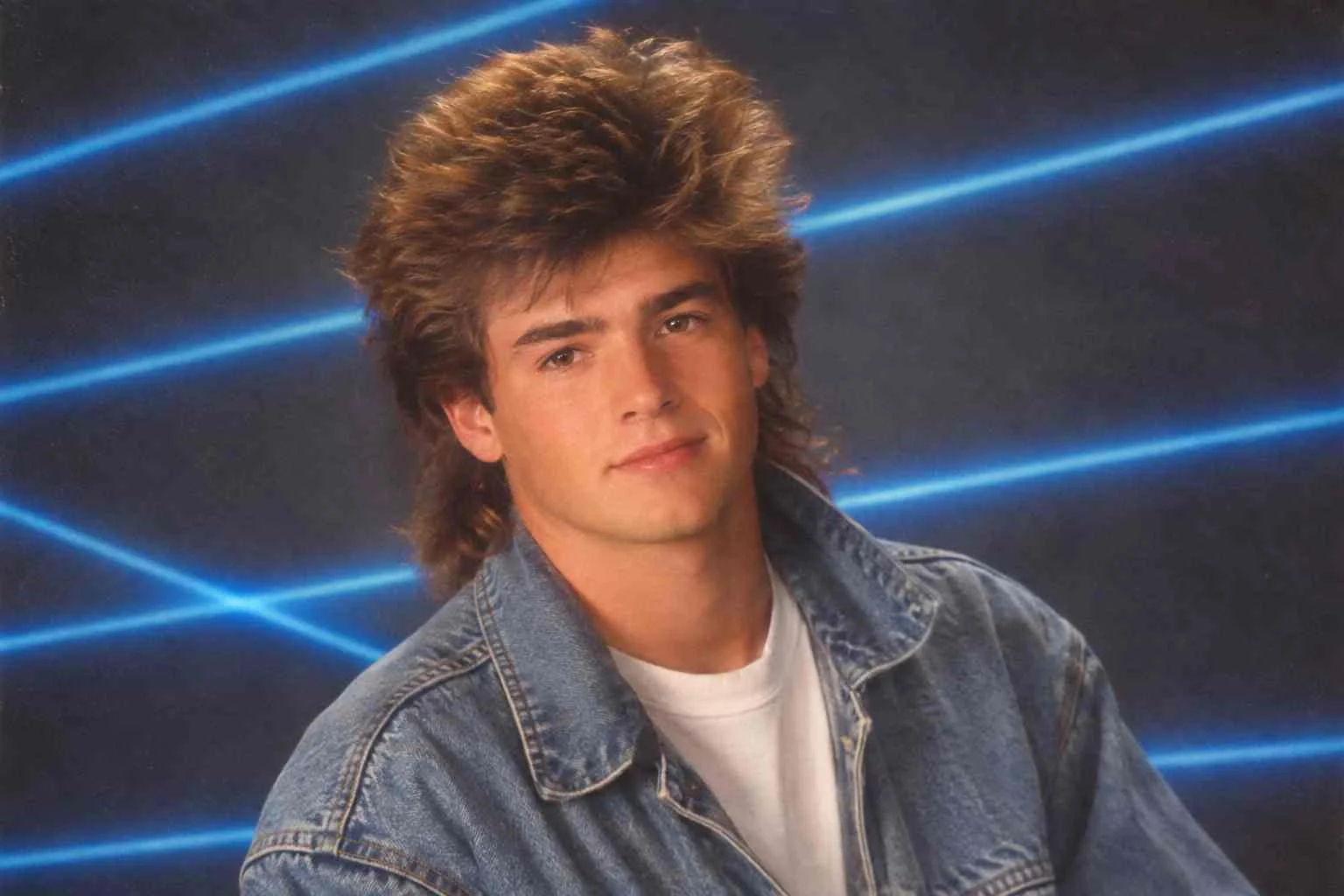
Authentic 1984 high school senior yearbook portrait. The subject has a voluminous, hairsprayed retro hairstyle, wearing an oversized denim jacket over a plain crewneck t-shirt. The background features iconic vibrant blue neon laser streaks across a dark grey backdrop. Shot on 35mm film, soft-focus lens, warm studio lighting, visible authentic film grain, matte finish.
2. The Corporate Power Suit Executive
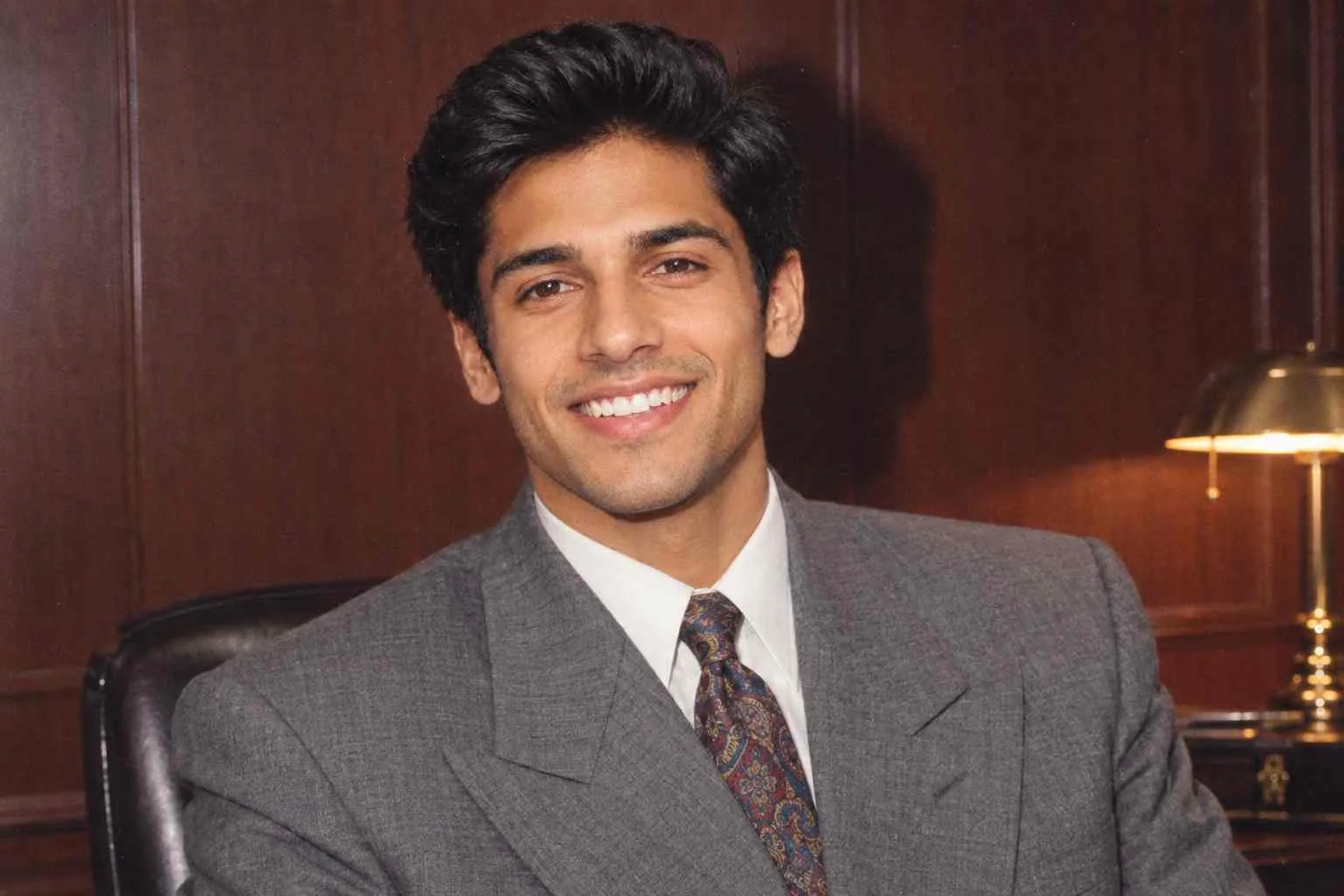
A professional corporate portrait from 1988. The subject wears a sharp, double-breasted grey power suit with prominent shoulder pads and a silk patterned tie. Posing in front of a dark, polished mahogany-paneled wall with a vintage desk lamp softly glowing in the corner. Flash photography style with heavy drop shadows, classic film grain, high contrast, muted color palette.
3. The 1980s Bollywood Retro Classic
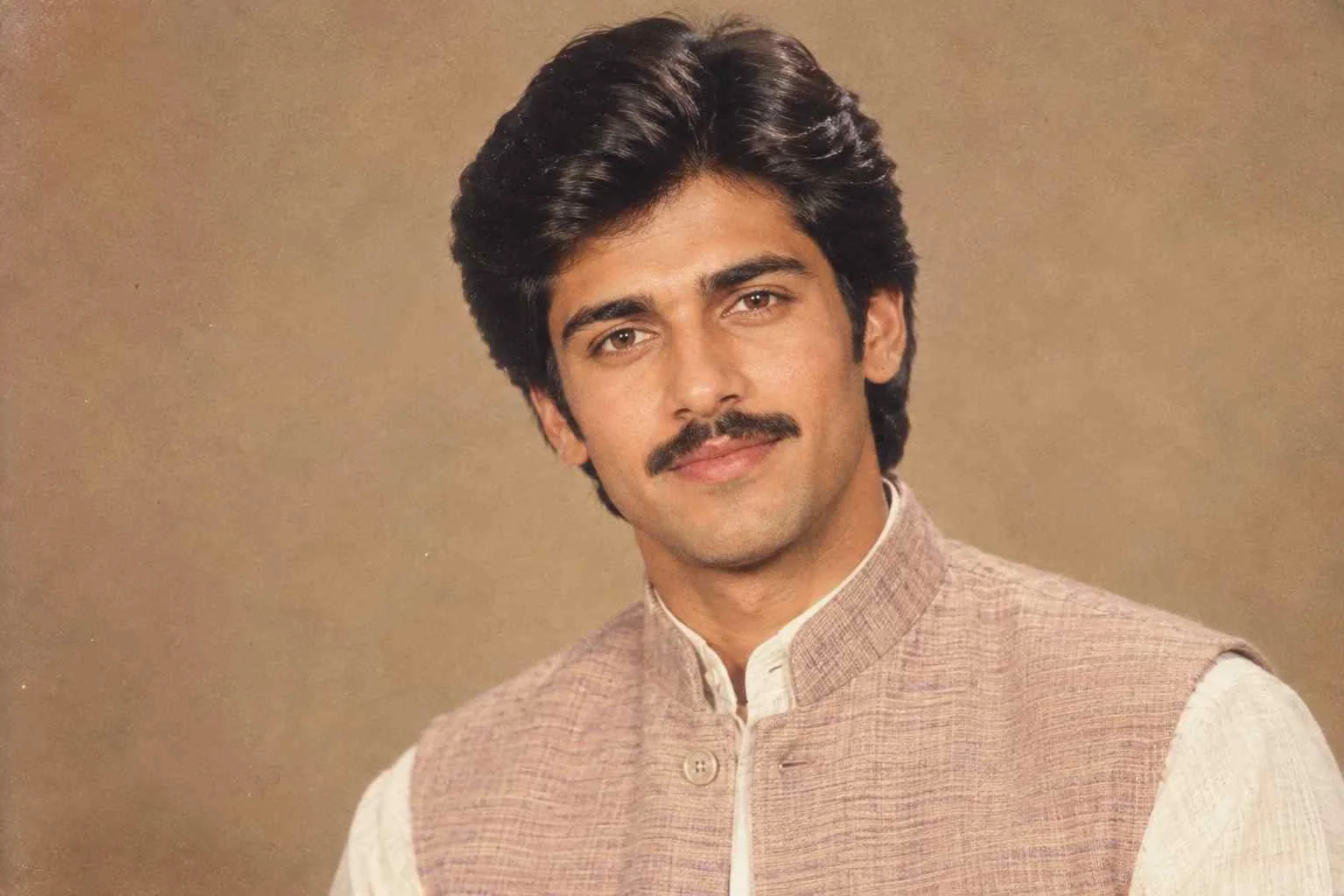
A 1980s retro Indian cinema portrait. The subject features a classic thick retro mustache, neatly parted voluminous hair, and wears a classic handwoven pastel Nehru jacket over a crisp white khadi shirt. Posing against a solid, muted beige painted studio canvas. Warm analog lighting tones, shot on vintage film stock, subtle chromatic aberration, authentic printed paper photo texture.
4. The Analog Street Candids (Kodachrome Style)
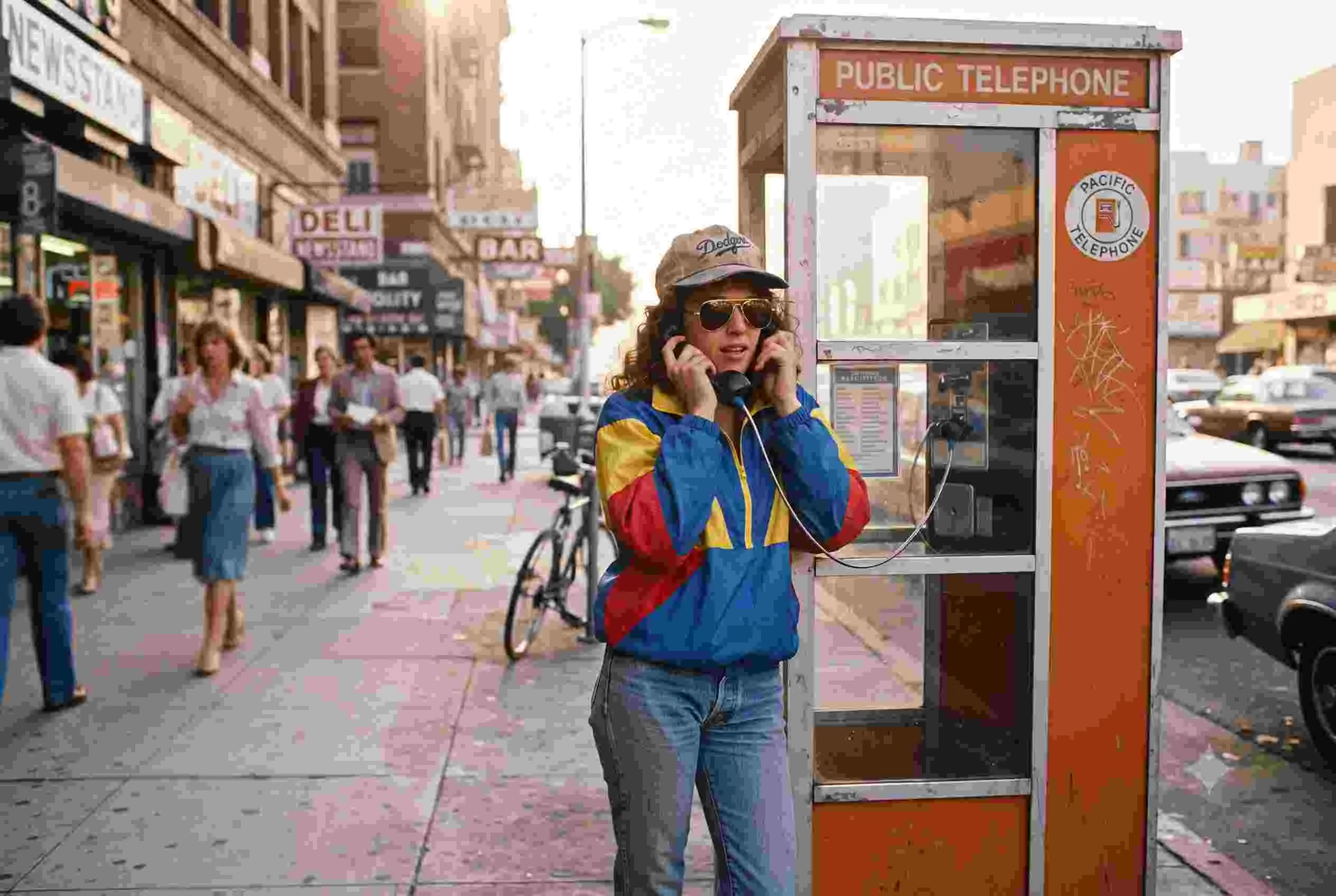
A candid, everyday outdoor street photograph from 1982. A person standing next to an old public telephone booth on a city sidewalk, wearing a bright vintage windbreaker and retro aviator sunglasses. Shot on authentic Kodachrome film, rich warm color tones, sharp contrast, natural direct afternoon sunlight, heavy organic film grain, slight lens flare.
5. The Glamour Studio Portrait
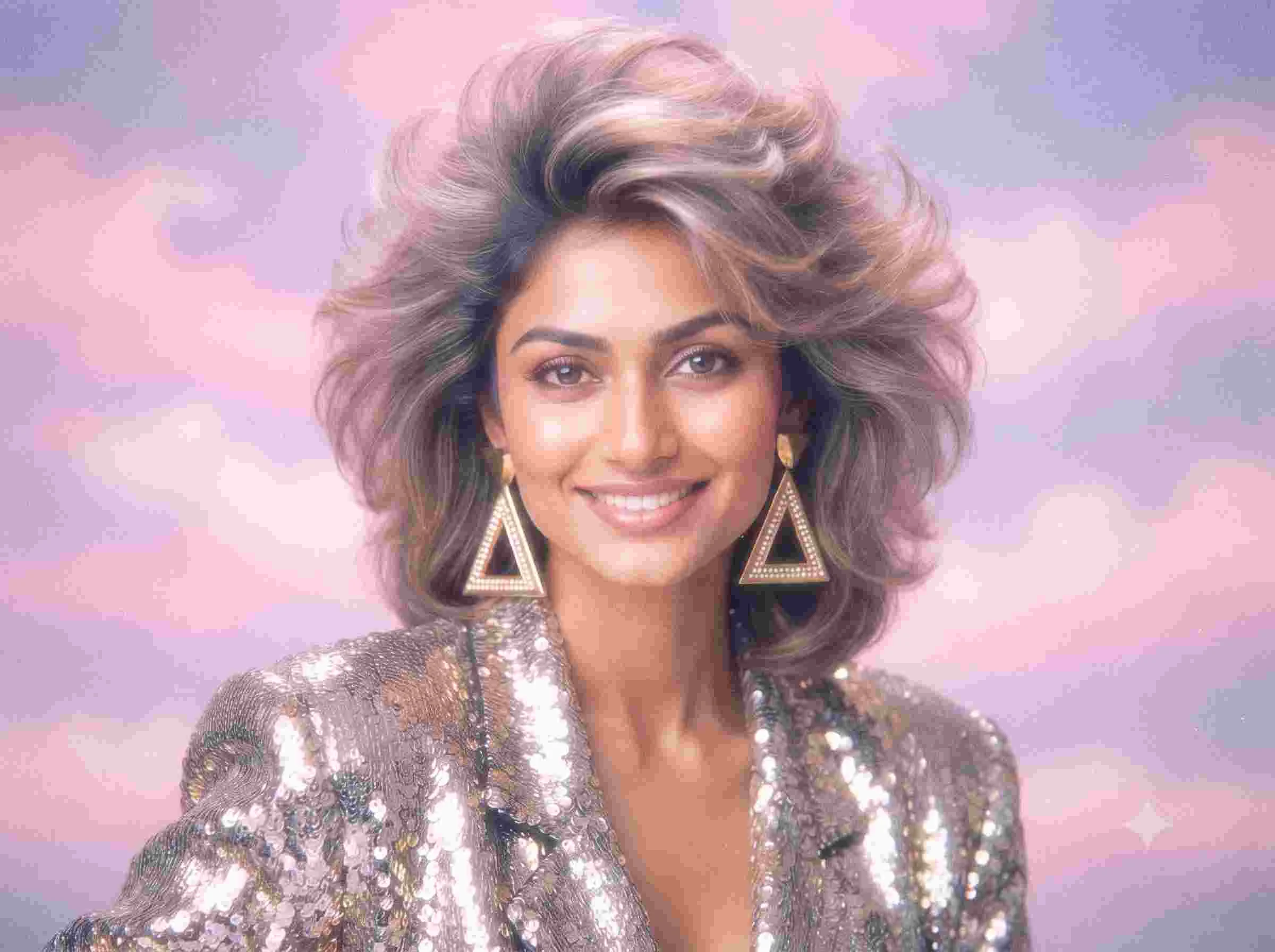
A mid-1980s glamour mall studio portrait. The subject has dramatic, feathered hair, wearing a shimmering metallic sequin jacket with large statement geometric earrings. The background is a soft, airbrushed pink and purple pastel cloud gradient. Diffused hazy glow filter effect, overexposed studio lighting, vintage print aesthetic, zero digital sharpness.
6. The Retro Tech Enthusiast
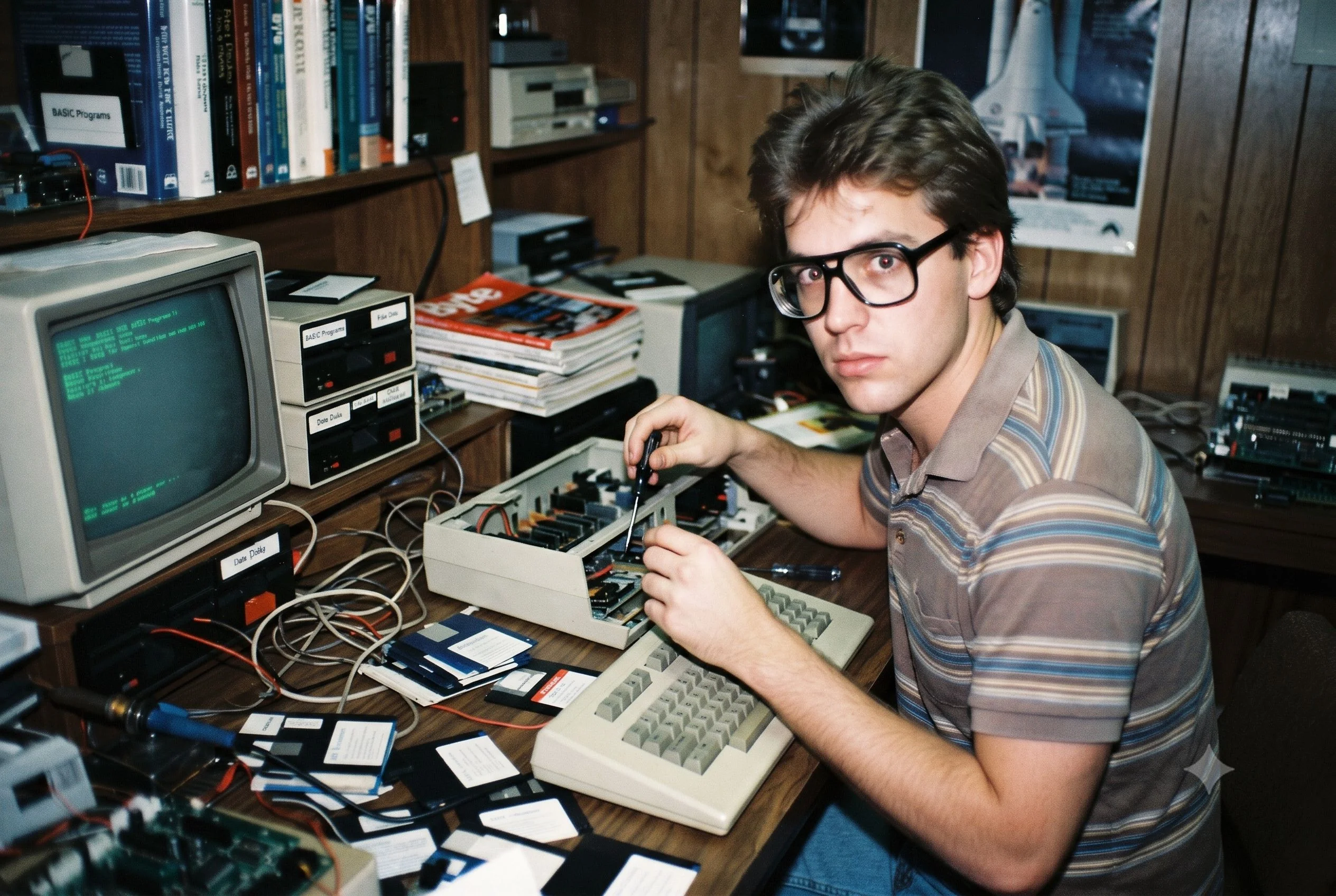
A 1985 indoor casual photograph of a tech hobbyist sitting at a desk filled with early analog computers and floppy disks. The subject wears large thick-rimmed plastic glasses and a striped polo shirt. Shot with a consumer-grade vintage camera, harsh direct built-in flash, slight red-eye effect, authentic vintage indoor color distortion, heavy grain.
7. The Vintage Fitness and Athleisure Aesthetic
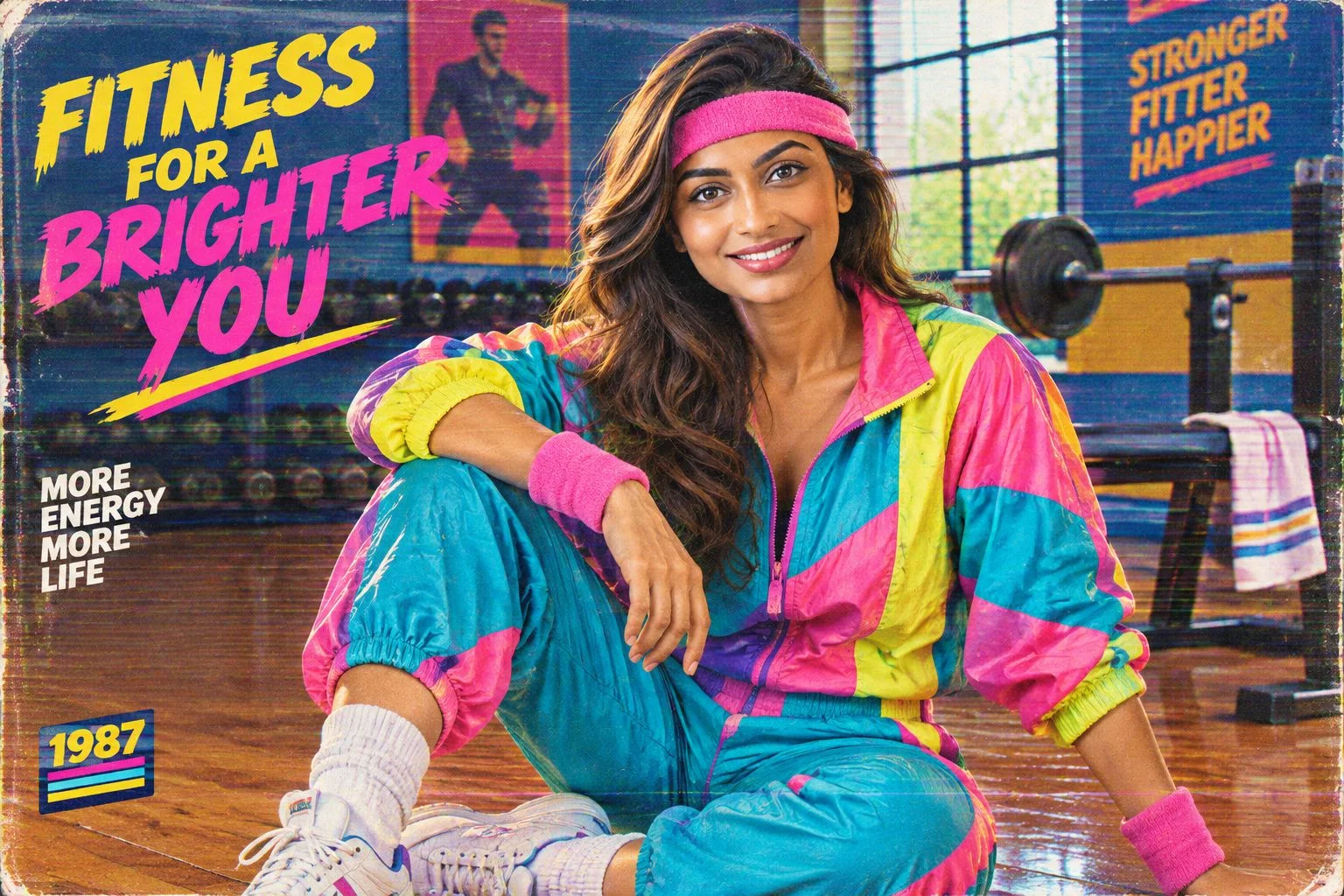
A 1987 fitness promotional photo. An individual sporting a brightly colored neon tracksuit with matching headbands and wristbands, posing inside a vintage gym with wood-plank flooring. Low-fidelity analog camera render, saturated primary colors, visible scanning lines, authentic retro print magazine texture.
8. The Classic Family Portrait Archive
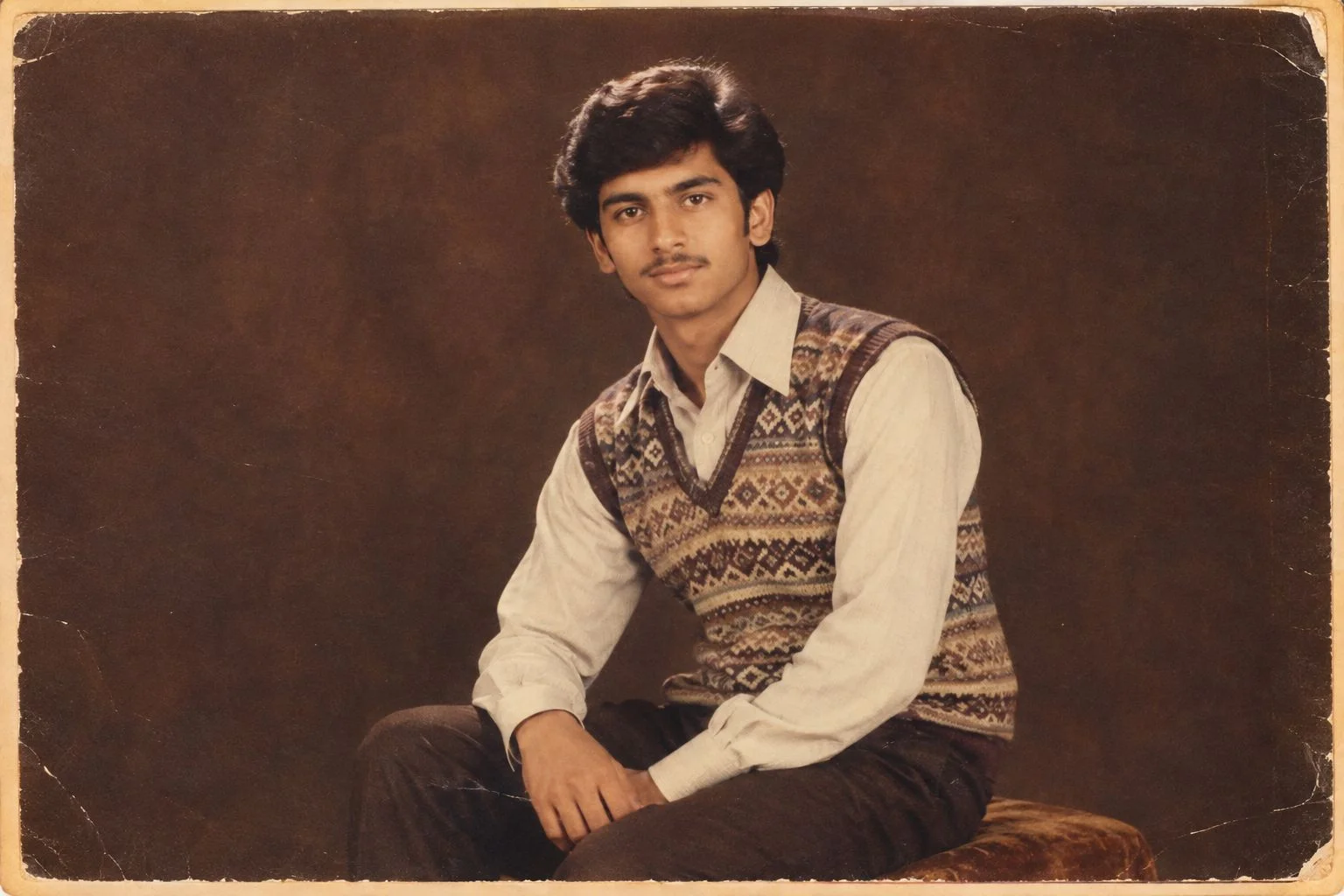
An authentic 1983 family studio archive photograph. The subject is sitting formally on a brown velvet stool, wearing a patterned knit sweater vest over a collared button-down shirt. Solid dark brown textured muslin backdrop. Soft overhead hair-light, faded color contrast, aged photo paper texture with slightly yellowed edges.
9. The Subdued Local Handloom Aesthetic
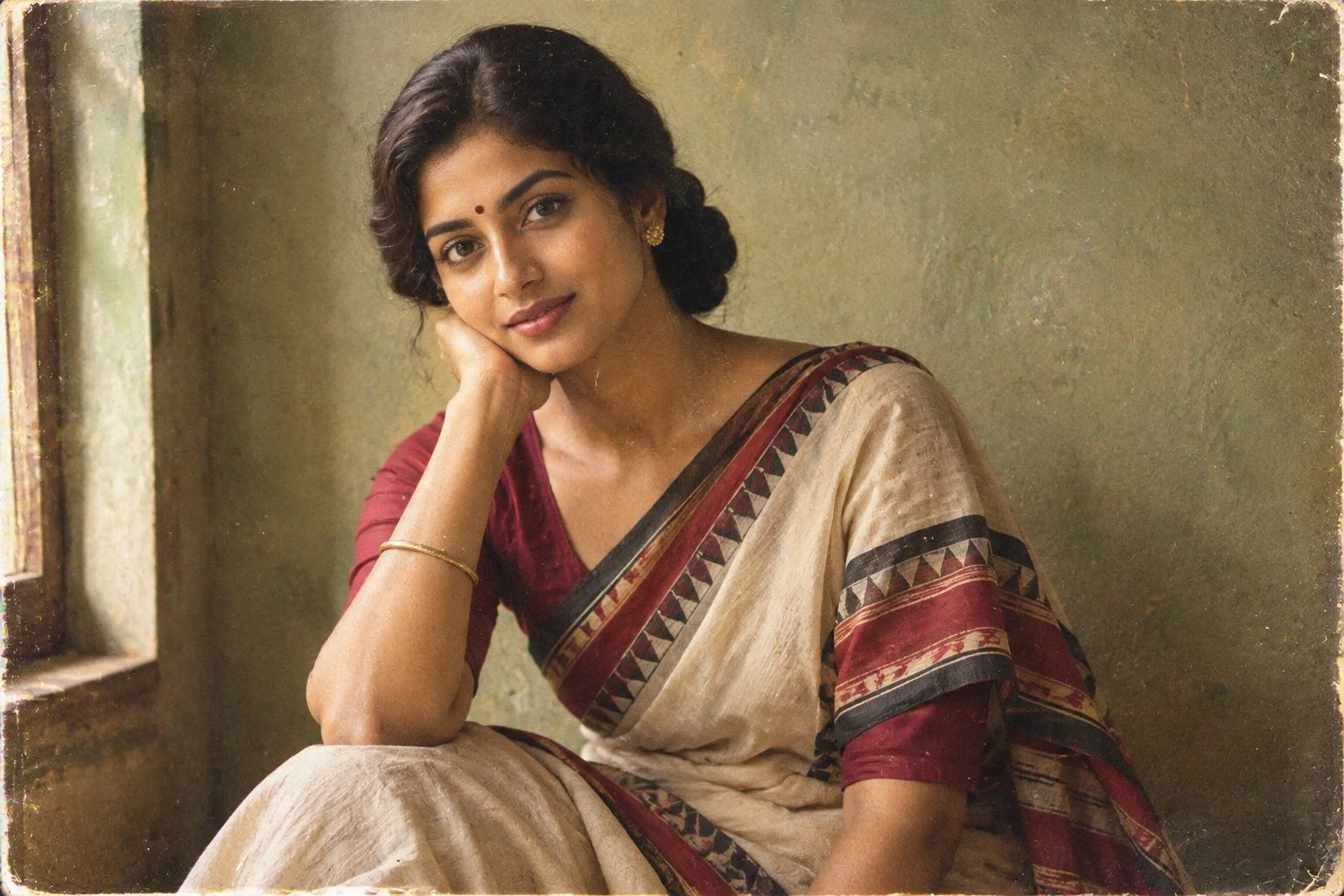
A vintage 1980s traditional portrait. A woman wearing a classic handloom cotton saree with bold geometric borders and minimal traditional jewelry, hair styled in a neat retro bun. Background is a simple textured lime-washed plaster wall. Natural side-window light, soft shadows, shot on slow-speed analog film, muted earthy color palette, organic grain.
10. The 1989 Electronic Music Producer
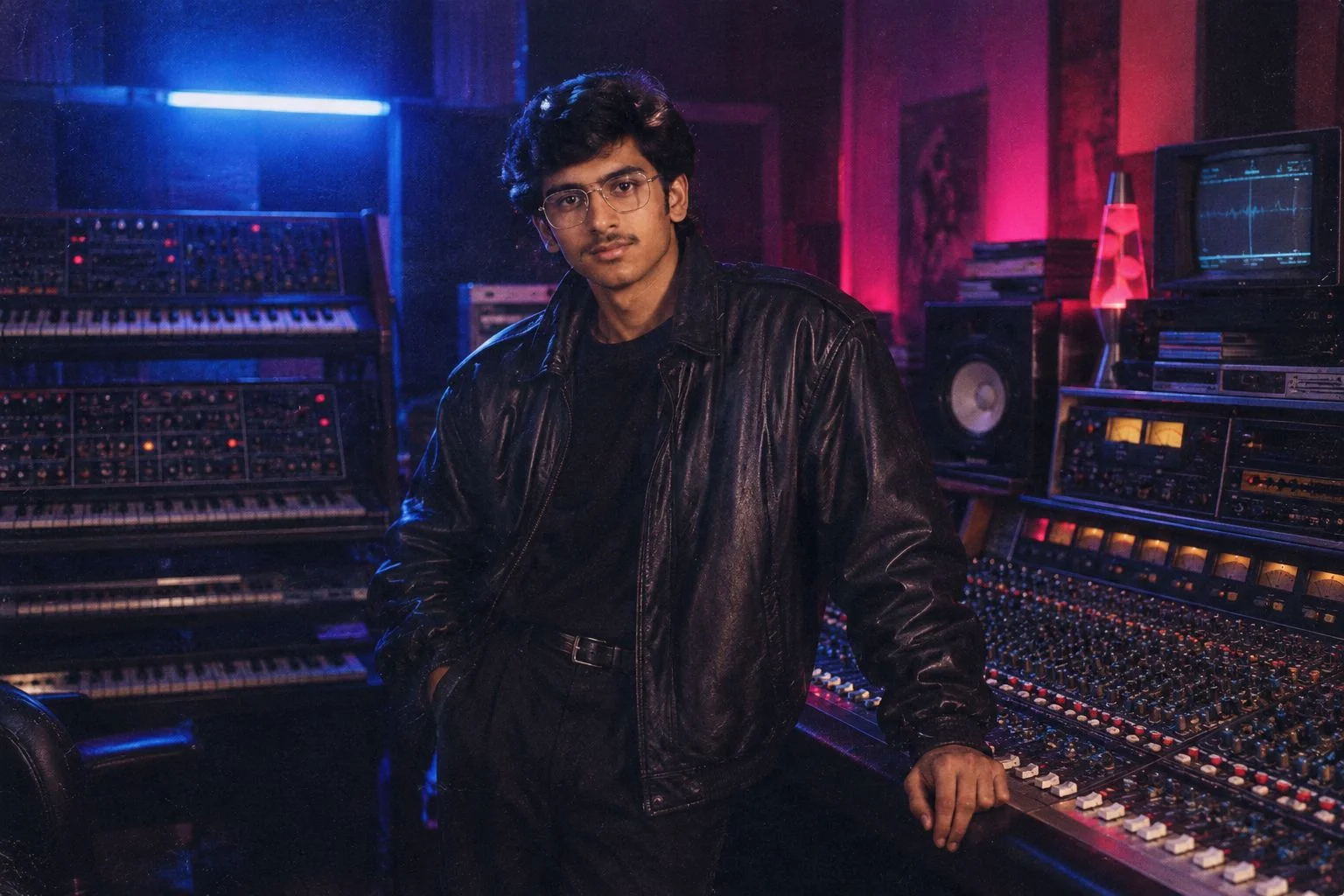
A moody, low-light studio portrait from 1989. A music producer standing next to large analog mixing consoles and synthesizers, wearing an oversized black leather jacket and thin metal-rimmed spectacles. Cool blue and magenta ambient neon backlighting, high ISO analog film grain, deep shadows, cinematic retro look.
The Future of Nostalgia
The 1980s AI photo trend is more than a fleeting digital fad; it represents a fundamental shift in how society interacts with historical styles. By combining advanced deep learning with human memory and creativity, users can actively participate in past cultural movements rather than just observing them. As generative AI technology continues to advance, the boundaries between modern digital photography and authentic historical archives will become increasingly seamless.